
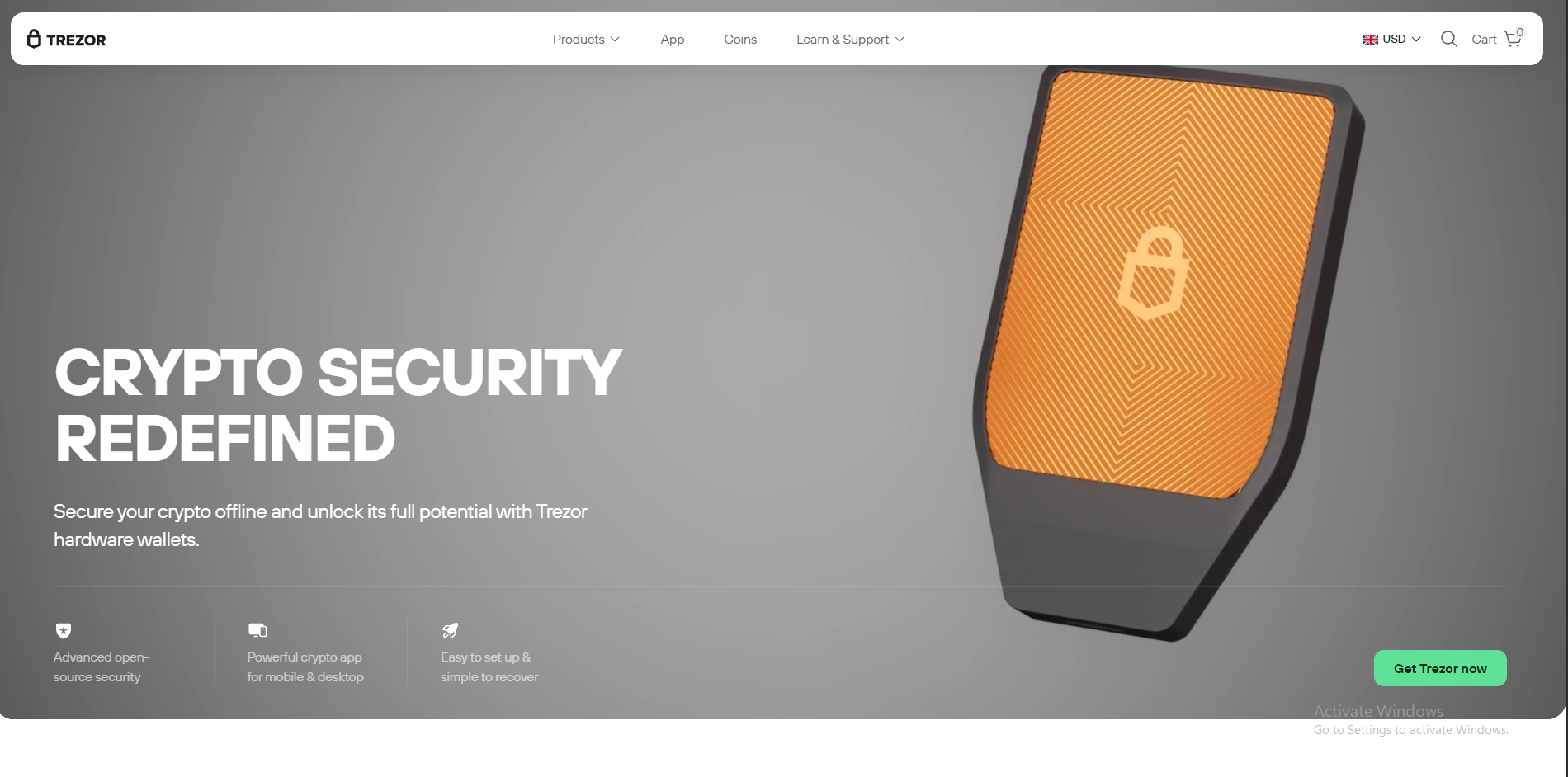
🔐 Overview of Trezor
Trezor.io is the official platform for Trezor, one of the pioneers in crypto security and the creator of the world’s first hardware wallet (launched in 2014).
Trezor is developed by SatoshiLabs, a Czech-based company focused on privacy, cryptography, and self-custody solutions. The brand has built a strong reputation over more than a decade, serving millions of users globally.
At its core, Trezor offers hardware wallets—physical devices that store your crypto private keys offline, completely isolated from internet threats. This makes it one of the safest ways to protect digital assets.
🧩 What Trezor Offers
On the official site, users can explore and purchase several wallet models, including:
- Trezor Model One (entry-level)
- Trezor Model T (touchscreen upgrade)
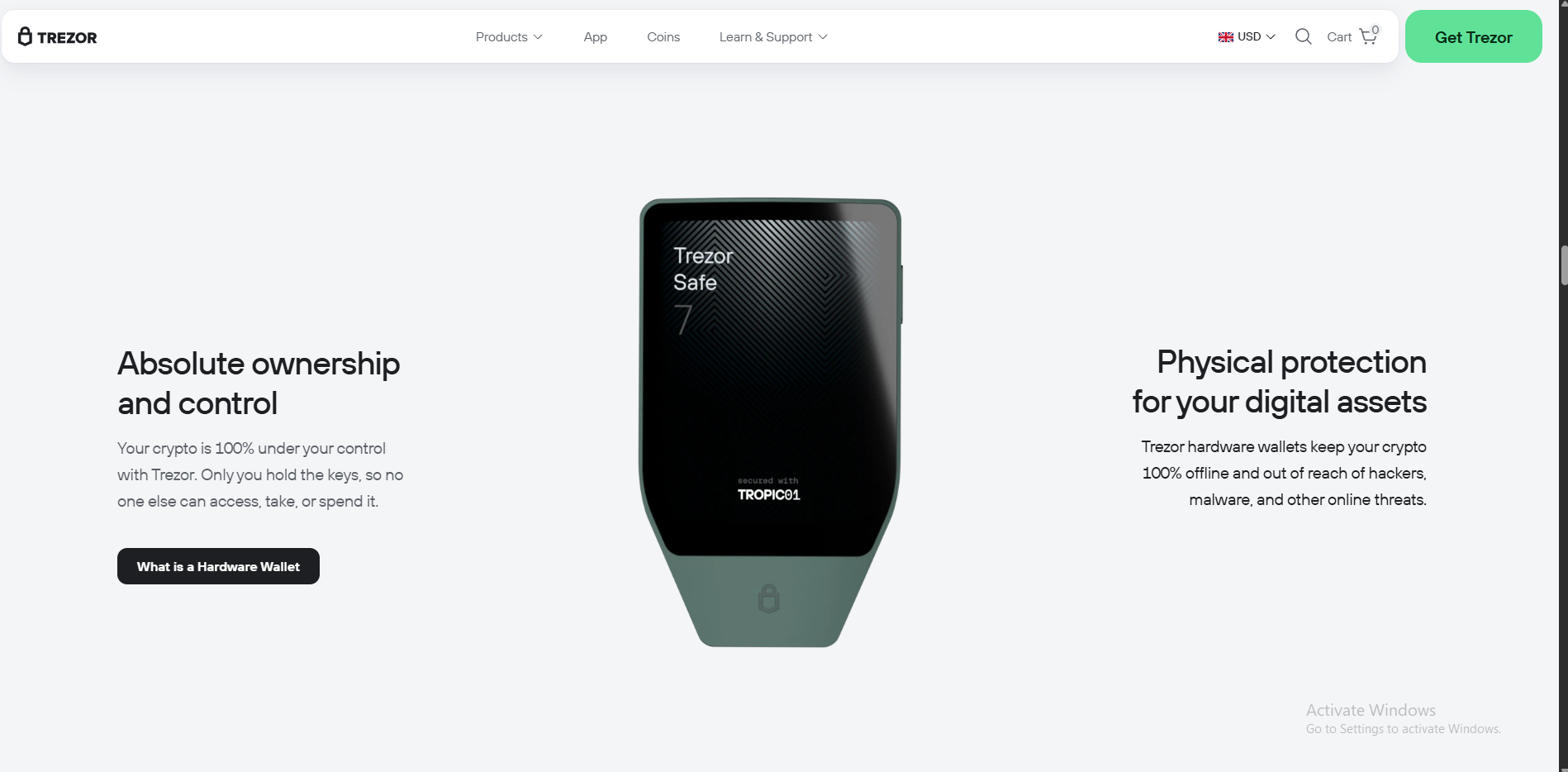
- Trezor Safe 3 / Safe 5 / Safe 7 (latest generation devices)
These devices work with the Trezor Suite app, which allows users to:
- Store and manage crypto assets
- Send and receive coins
- Buy, sell, and swap crypto
- Connect to DeFi apps and external wallets
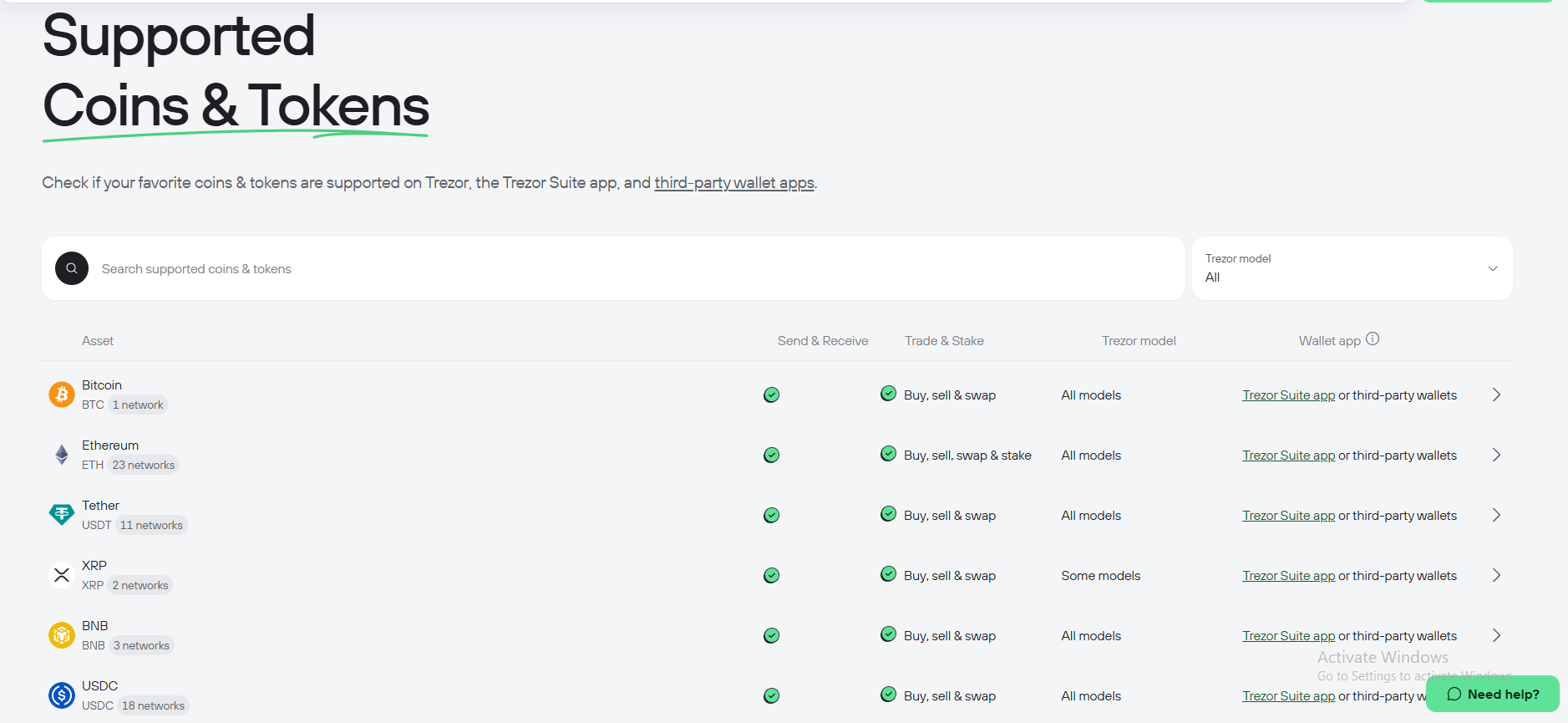
Trezor supports thousands of cryptocurrencies, including major networks like Bitcoin, Ethereum, Solana, and more.
🔑 How Trezor Works
The key concept behind Trezor is cold storage:
- Private keys are stored offline inside the device
- Transactions must be physically confirmed on the device
- Even if your computer is infected, your crypto remains safe
👉 A hardware wallet like Trezor ensures that you—not an exchange—control your assets.
Additionally, Trezor uses:
- Backup recovery phrases
- PIN protection
- Optional passphrase security
This means even if the device is lost, funds can still be recovered securely.
🧠 Positioning
Trezor positions itself as a “trustless, open-source security solution”, emphasizing:
- Full ownership (no third-party custody)
- Transparency (open-source code)
- Long-term crypto storage
Compared to competitors like Ledger, Trezor stands out for its open-source philosophy, which allows the global security community to audit its code.
✅ Pros of Trezor
One of the biggest advantages of Trezor is its proven security model. By keeping private keys offline, it protects users from:
- Hacks
- Malware
- Exchange failures
This is one of the main reasons hardware wallets are considered essential for serious crypto investors.
🔍 Open-Source Transparency
A major differentiator is that Trezor is fully open-source. This means:
- Code can be publicly audited
- Security vulnerabilities can be identified faster
- Users don’t have to blindly trust the company
This gives Trezor a strong credibility advantage over more closed ecosystems.
🧩 Easy Setup & Usability
Despite being a security-focused device, Trezor is designed to be user-friendly:
- Step-by-step setup
- Clean interface via Trezor Suite
- Beginner-friendly onboarding
Even users new to crypto can get started relatively quickly.
🔐 Strong Backup & Recovery System
Trezor provides a recovery phrase system, allowing users to:
- Restore funds if the device is lost
- Maintain full control without relying on support
👉 This ensures long-term asset protection, even in worst-case scenarios.
🌍 Wide Ecosystem Compatibility
Trezor supports:
- Thousands of coins
- Integration with wallets like MetaMask
- Access to DeFi, NFTs, and dApps
This makes it suitable for both:
- Long-term holders
- Active crypto users
🏆 Reputation & Longevity
Trezor is one of the oldest and most trusted names in crypto security, with:
- 10+ years in the market
- Millions of users worldwide
- Continuous product innovation
👉 This long track record is a major trust factor in an industry full of scams.
❌ Cons of Trezor
Despite its strong reputation in the crypto security space, Trezor is not without its limitations—and understanding these is crucial before deciding if it’s the right hardware wallet for you.
One of the most debated aspects of Trezor is its lack of a Secure Element chip in many of its devices, especially older models. Instead of relying on specialized hardware protection, Trezor follows an open-source, transparency-first approach, where its firmware and design can be publicly audited. While this builds trust and allows the security community to verify its integrity, it also means that, in theory, the device may be more vulnerable to advanced physical attacks if someone gains direct access to it. This doesn’t affect most everyday users, but it is a notable difference when compared to competitors like Ledger, which prioritize hardware-level isolation.
Another important drawback lies in the level of responsibility placed on the user. Trezor is built around the principle of full self-custody, meaning you—and only you—control your crypto. This comes with a serious implication: if you lose your recovery phrase, your funds are permanently unrecoverable. There is no “forgot password” option, no centralized backup, and no customer support that can restore access. For experienced users, this is a feature. For beginners, it can feel like a high-stakes risk.
From a usability perspective, Trezor is relatively beginner-friendly, but it still requires a basic understanding of crypto security practices. Managing wallets, interacting with decentralized applications, or using external integrations can become complex over time. Unlike some competitors that try to bundle everything into a single ecosystem, Trezor often relies on third-party wallet integrations, which can make the experience feel slightly fragmented.
There are also some hardware and convenience limitations. Most Trezor devices do not support Bluetooth, meaning they must be connected via USB. This can be inconvenient for users who prefer managing assets on mobile devices. Additionally, while functional, the physical design of Trezor wallets tends to be more minimal and less polished compared to newer, more premium-looking alternatives on the market.
Finally, like all hardware wallets, Trezor is not immune to the risk of counterfeit devices. Buying from unofficial sources can expose users to tampered products designed to steal funds. This makes purchasing directly from the official site absolutely essential.
💰 Pricing of Trezor
Trezor follows a relatively straightforward pricing strategy, offering a range of devices that cater to different types of users—from beginners to advanced crypto holders.
At the entry level, the Trezor Model One is priced around $69, making it one of the most affordable hardware wallets available. Despite its lower cost, it still provides the core security features that define Trezor’s ecosystem, making it an attractive option for users who are just starting to explore cold storage.
Moving up, newer models like the Trezor Safe 3 typically fall within the $79 to $99 range. These devices represent a more modern iteration of Trezor’s hardware, offering improved security architecture while maintaining a relatively accessible price point. For many users, this tier strikes the best balance between cost and performance.
At the higher end, the Trezor Model T and newer premium models can range from $179 to over $200. These devices introduce features like a touchscreen interface, which significantly improves usability—especially when entering PINs or passphrases directly on the device. While the added convenience is valuable, the core security remains similar across all models, which means not every user will find the upgrade necessary.
Compared to competitors, Trezor is generally slightly cheaper at the entry level and roughly comparable in the mid-to-premium range. For example, entry devices from Ledger are priced similarly, while higher-end models can overlap depending on features.
What makes Trezor’s pricing appealing is its long-term value. A single purchase can secure your assets for years, with no subscription fees or hidden costs. However, it’s important to recognize that hardware wallets are still more expensive than software wallets, which are often free. The difference, of course, lies in the level of security.
In the end, Trezor’s pricing reflects its philosophy: pay once for long-term peace of mind.